Tidal Is Correct to Ban Entirely AI-Generated Music
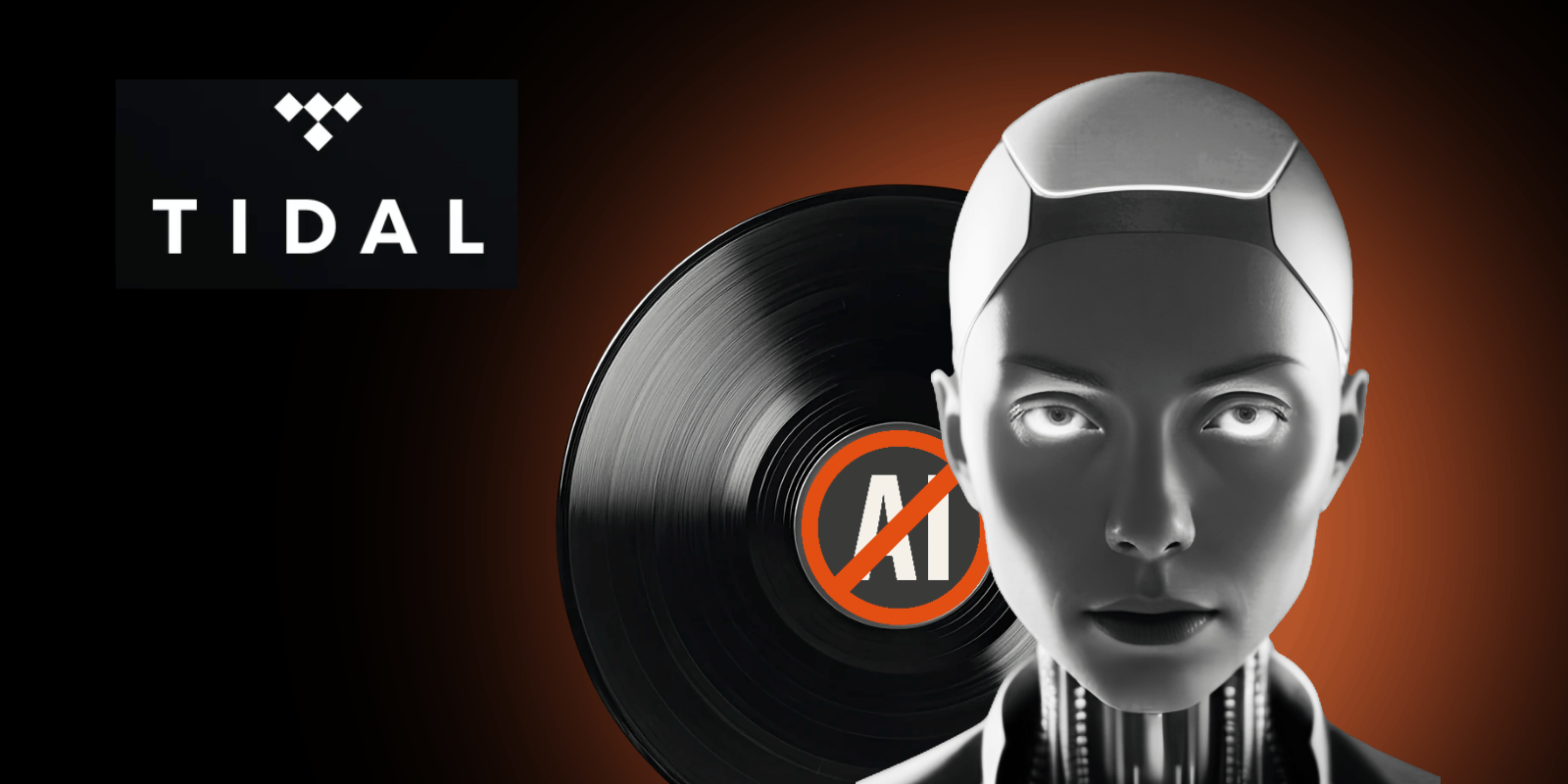
AI gradually found its way into DJing due to changing music consumption habits and a shift in DJ culture itself. Alongside this, DJ software has simplified and automated several processes for beginner DJs, including beat syncing and transitions, while AI-powered tools are also making track selection and music discovery easier. Spotify also introduced its AI DJ feature, offering personalized music selections and commentary to listeners. More recently, tools like Suno have made it possible to generate an entire track from a short text prompt. These developments have raised concerns about the growing role of synthetic music, and whether platforms are prioritizing convenience and volume at the expense of the human element of music and DJ culture. With the Tidal AI music ban, one streaming platform has now decided where it stands.
The Tidal AI Music Ban Starts on December 9
Tidal has recently updated its AI policy and announced that it will begin banning wholly AI-generated tracks from December 9, 2026. From that date, new tracks detected as entirely AI-generated will be rejected, and those already on the platform will be removed. While explaining the update, Tidal listed several reasons behind its decision. According to the platform, 6.3% of all available music on Tidal has been tagged as wholly AI-generated, translating to approximately 27 million tracks.
Over the last 90 days, 43% of all tracks distributed to the platform were detected as entirely AI-generated. Despite these high numbers, very few people are listening to them. According to Tidal, 96% of the tracks tagged as AI-generated have not received a single stream in the last 90 days.
Tidal also mentioned that AI-generated music is being used in some cases to mislead listeners and impersonate artists. The platform has already taken down more than 65,000 tracks flagged for suspected artist-name impersonation. Tidal wants to remain a platform that prioritizes artists and ensures that authentic music remains visible, receives the royalties it deserves and does not get buried under a growing volume of AI-generated tracks.
The ban, however, does not cover everything made with AI. Tracks that were created with the assistance of AI tools, as long as they are not the sole output of those tools, will still be allowed on the platform.
Entirely AI-Generated Music Is a Gimmick
Setlist.ID’s position is that entirely AI-generated music is a gimmick, because it is based on a summary of what has already been made. A model that has learned from the history of recorded music can only return a version of that history. Good results can be produced, but they quickly become repetitive and predictable, and the technology still struggles to explore entirely new directions.
AI the summation of recorded history. As artists, as musicians, as DJs, we need to be constantly pushing and creating the future. A DJ picks tracks for the love of the people in front of them, and that connection between the DJ and the room is something a generated track has little part in. Tidal’s own numbers point the same way. Millions of entirely AI-generated tracks are being uploaded, and almost none of them are being played.
AI Assistance Is Where the Potential Is
Using AI assistance to make music is a different matter. It is interesting, and it has potential. It is similar to how websites are now generated with AI, where the tool does much of the building but a person still decides what the website should be. Tools like Ableton plugins have allowed ordinary people to get a head start on music creation without necessarily having to learn advanced production systems from the beginning. AI is a tool, and a useful one, but the person using it is what matters most.
The same applies to DJing. Software and track ID tools are making DJing and music discovery easier. These tools save DJs time and costs, so they can focus more on mixing, practicing and performing for their audiences. They also give smaller labels and emerging DJs more opportunities to be discovered. Setlist.ID is one of those tools. We identify the tracks played in a DJ set, so that listeners can find the music and the people who made it.
The Person Behind the Decks Matters
For us, the connection between the DJ and the audience is what matters when a DJ set is played. AI can assist the people who make and play music, and we expect it to become a bigger part of how they work. But music made entirely by AI, with no person behind it, has very little to offer a dance floor, and Tidal is correct to draw the line there.